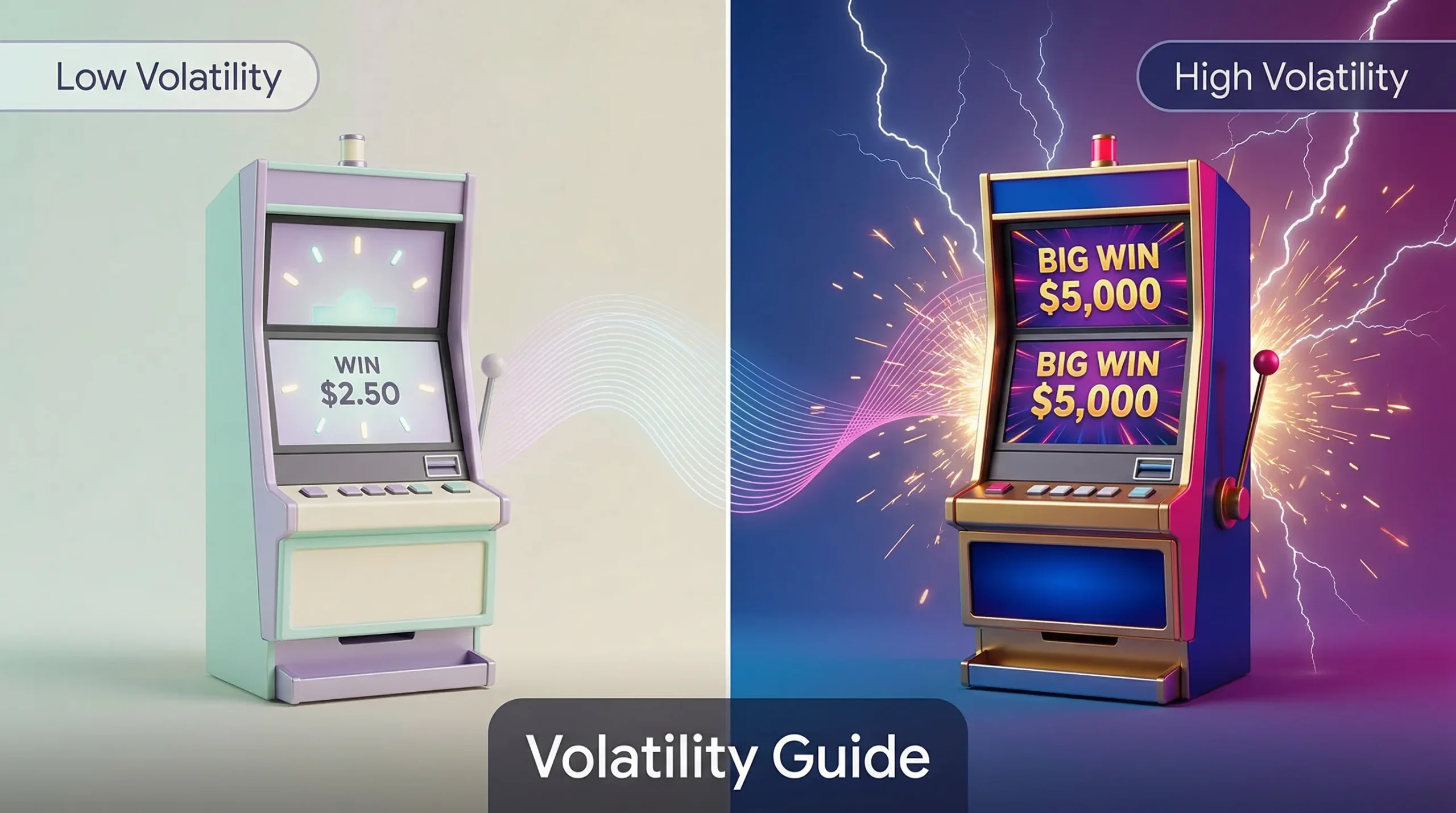
Introduction: What Is Slot Volatility?
Volatility describes how slot outcomes distribute over time. High volatility games produce infrequent wins with larger payouts when they hit. Low volatility games produce frequent wins with smaller individual amounts. The total return to players might be identical, but the experience differs dramatically.
Understanding volatility helps match games to your goals and bankroll. A player seeking extended entertainment from a limited budget needs different games than one hunting progressive jackpots with substantial funds to risk. Neither preference is wrong, but playing mismatched volatility leads to frustration and poor outcomes.
The sweepstakes casino industry generated $10 billion in sales during 2024, according to Eilers & Krejcik Gaming research. That volume supports games across the volatility spectrum. The related social casino market reached $7.1 billion in gross revenues, demonstrating demand for both real-prize sweepstakes and entertainment-only play. Within these markets, volatility preferences segment players as much as theme or feature preferences.
High Volatility Progressives
High volatility progressive slots concentrate value in rare, large payouts. You might spin hundreds of times without meaningful wins, then hit a prize that exceeds your total investment. The mathematical return may be reasonable, but your lived experience consists mostly of losses punctuated by occasional windfalls.
Progressive jackpots almost always qualify as high volatility. The jackpot contribution rate reduces base game returns, meaning non-jackpot spins pay less than equivalent non-progressive games. You accept worse baseline performance in exchange for jackpot eligibility. If the jackpot never hits during your playing lifetime, you experienced pure downside from that tradeoff.
Bankroll requirements for high volatility play exceed what the bet size alone suggests. A $1 spin on a high volatility game might require $500 or more in reserves to have reasonable chances of surviving variance long enough to catch favorable swings. Playing high volatility with insufficient bankroll means probable wipeout before the game’s return profile can manifest.
Session outcomes on high volatility games are highly unpredictable. One session might yield nothing. Another might produce wins ten times your starting balance. This unpredictability attracts some players and frustrates others. Those who enjoy the anticipation and can afford the dry spells thrive on high volatility. Those who need consistent feedback or have limited budgets suffer.
The psychological impact of extended losses requires consideration. High volatility means long stretches where nothing good happens. If losing 50 spins in a row triggers frustration that leads to poor decisions like bet increases or limit violations, high volatility games will cause behavioral problems regardless of their mathematical properties.
Game selection within high volatility involves choosing among different risk profiles. Some high volatility games offer moderate jackpots with somewhat better hit frequencies. Others offer massive jackpots with astronomically long odds. Both are high volatility, but they serve different player goals.
Low Volatility Progressives
Low volatility slots distribute returns across many small wins rather than concentrating them in rare large payouts. You win frequently, but individual wins typically fall below your bet amount or only slightly exceed it. The steady stream of wins creates positive feedback even when net results trend negative.
Progressive elements on low volatility games usually involve smaller jackpots or tiered systems where lower tiers hit regularly. The Mini or Minor jackpots might trigger multiple times per day across the player base, delivering modest prizes frequently. The Grand jackpot remains rare but does not dominate the game’s value proposition.
Bankroll sustainability improves dramatically with low volatility. The same $100 bankroll that might last 20 minutes on a high volatility game could provide hours of play on low volatility alternatives. The frequent wins replace some losses, extending session duration even when overall results favor the house.
Entertainment value per dollar spent often favors low volatility for players who measure enjoyment in play time rather than jackpot potential. If your primary goal is relaxation and engagement rather than life-changing wins, low volatility delivers more consistently. The absence of jackpot dreams is offset by the absence of crushing dry spells.
Winning sessions are more common with low volatility, though the wins tend to be smaller. You might end 40% of sessions slightly ahead rather than 10% of sessions substantially ahead. This steadier distribution appeals to players who find frequent small successes more satisfying than rare large ones.
The drawback is limited upside. Low volatility games rarely produce the dramatic wins that make gambling stories. If you seek the excitement of potentially massive payouts, low volatility cannot deliver that experience. The tradeoff is predictability versus possibility.
Choosing Based on Your Bankroll
Bankroll size should drive volatility selection more than personal preference. Playing high volatility with insufficient funds is not adventurous; it is mathematically likely to produce total loss before variance evens out. Matching volatility to resources improves outcomes regardless of what you wish you could afford to play.
A common guideline suggests having at least 100-200 bets in reserve for high volatility games. If your session budget is $50 and minimum bets are $0.50, you have 100 bets available, which represents the minimum for high volatility survivability. For medium volatility, 50-100 bets provide adequate cushion. Low volatility can work with as few as 30-50 bets, though more is always better.
Bet sizing within sessions should reflect volatility reality. Starting with large bets on high volatility games burns through reserves quickly. Starting smaller preserves resources until favorable swings arrive. Some players begin with minimum bets on high volatility games, increasing only after wins provide cushion for larger risks.
Mixed volatility approaches balance entertainment and jackpot potential. You might allocate 70% of session resources to low volatility games that sustain extended play, reserving 30% for high volatility progressive attempts. This structure provides consistent entertainment while maintaining some jackpot exposure.
Time constraints also influence volatility selection. Short sessions favor lower volatility since high volatility might not have time to produce wins before you need to stop. If you have 30 minutes, a low volatility game delivers more action than a high volatility game that might require hours for favorable variance to appear.
Loss tolerance varies independently from bankroll size. Some players with adequate funds for high volatility cannot emotionally handle the losing streaks involved. If losing 100 spins without a meaningful win triggers anxiety or chase behavior, low volatility protects your psychological wellbeing regardless of financial capacity.
Experimentation helps calibrate personal volatility preferences. Try both extremes with small stakes to discover what actually feels satisfying rather than assuming you know. Many players discover their optimal volatility differs from initial expectations once they experience the emotional reality of each style.
Matching Games to Goals
Volatility shapes the sweepstakes slot experience more than most players realize. High volatility offers jackpot potential at the cost of sustained losses between wins. Low volatility offers consistent engagement at the cost of limited upside. Neither is objectively better; they serve different goals and suit different resources.
Matching volatility to your bankroll protects against premature ruin. Playing high volatility without adequate reserves almost guarantees disappointing outcomes. Playing low volatility with substantial funds provides sustained entertainment that preserves your budget for future sessions.
Consider volatility alongside RTP, theme, and features when selecting games. A beautiful high volatility game that depletes your balance in ten minutes provides worse value than a simple low volatility game that entertains for hours. The best game for you depends on what you are actually trying to accomplish with your sweepstakes play.