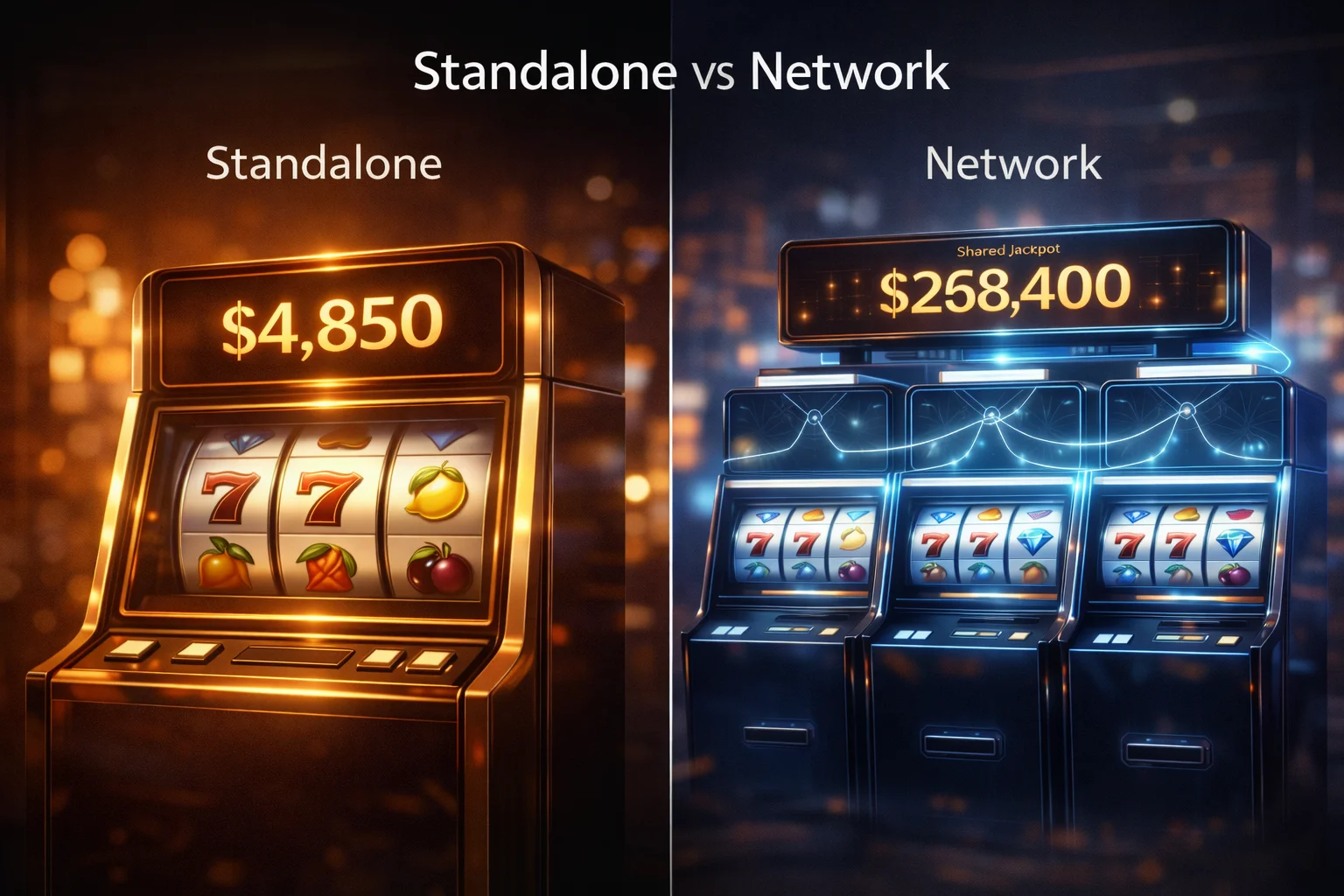
Introduction: Two Jackpot Structures
Progressive jackpots come in fundamentally different architectures that affect everything from prize size to win probability. Standalone progressives keep jackpot pools isolated to individual games. Network progressives link pools across multiple titles, sometimes spanning entire platforms or even multiple casinos. The choice between these structures shapes what you are actually playing for.
The sweepstakes casino market has grown at a compound annual rate of 60-70% between 2020 and 2024, according to KPMG’s industry analysis. That growth has supported both jackpot types, with different platforms emphasizing different structures based on their competitive positioning and player base size. Understanding the tradeoffs helps match your jackpot preferences to appropriate games.
Neither structure is objectively superior. Each optimizes for different outcomes that appeal to different player priorities.
How Standalone Progressives Work
Standalone progressives maintain jackpot pools tied exclusively to single games. Every wager on that specific slot contributes to that specific jackpot. No contributions come from other games. No one playing other titles competes for the prize. The isolation creates a closed system with complete visibility into jackpot dynamics.
The jackpot meter on a standalone progressive tells you exactly what you are competing for and provides indirect information about how many people are playing. A rapidly growing meter suggests high activity. A static meter suggests low competition. This transparency helps players estimate their relative odds, though precise calculations remain impossible without internal data.
Prize sizes on standalone progressives tend to be smaller than network alternatives. Fewer contributions mean slower accumulation. A standalone jackpot might take weeks to build what a network progressive accumulates in hours. For players who want six-figure or seven-figure jackpots, standalone structures rarely deliver those headline numbers.
Trigger frequency relative to contribution volume tends to be higher for standalones. With smaller target amounts and isolated competition, these jackpots hit more often per spin contributed. The prizes are smaller, but the wins are more achievable. This dynamic makes standalones attractive to players who prefer realistic shot at modest amounts over lottery-ticket odds at massive prizes.
Game selection for standalone progressives may be more limited. Platforms invest more development resources in network systems that can aggregate player activity across multiple titles. Standalones often appear in simpler game designs or as secondary features within games that also offer other jackpot types.
How Network Progressives Work
Network progressives pool contributions from multiple games into shared jackpots. A player spinning one linked slot contributes to the same jackpot as players spinning different linked slots. The aggregation dramatically accelerates prize accumulation and enables the massive jackpot amounts that make headlines.
The network can span a single platform, connecting all games at one sweepstakes casino into unified jackpot pools. Larger networks extend across multiple platforms, with separate casinos feeding the same progressive systems. The largest networks in the sweepstakes space connect multiple VGW-operated platforms, creating the industry’s biggest jackpot pools.
Prize sizes on network progressives can reach substantial amounts because more players contribute more frequently. The social casino market generated $7.1 billion in gross revenues during 2024, operating alongside the sweepstakes category and demonstrating the scale that aggregated player activity can achieve. Network progressives capture this scale by combining contribution streams that would otherwise remain isolated.
Competition expands proportionally with the network size. More players feeding the jackpot means more players competing to win it. Your individual odds of triggering a network progressive are lower than your odds on a standalone with similar trigger mechanics, all else being equal. The prize is larger precisely because more people want it.
Transparency decreases with network complexity. The jackpot meter shows the current prize, but you cannot easily assess how many competitors you face across all linked games. Activity on titles you have never heard of affects your odds on the title you are playing. This opacity makes strategic analysis more difficult than with standalone alternatives.
Tiered jackpots commonly operate within network systems. The same game might offer a standalone Mini jackpot alongside network-linked Major and Grand jackpots. This hybrid approach gives players access to both structures within single titles, though evaluating the combined value proposition requires understanding each tier separately.
Odds and Prize Size Comparison
The fundamental tradeoff between standalone and network progressives is odds versus size. Standalone progressives offer better individual win probability for smaller prizes. Network progressives offer larger prizes with correspondingly longer odds. Neither structure provides better expected value; they just distribute that value differently.
Consider two hypothetical progressives with identical contribution rates. The standalone feeds a pool that triggers at $1,000 on average, with one winner per 100,000 spins. The network feeds a pool that triggers at $100,000 on average, with one winner per 10,000,000 spins. Both return the same percentage to jackpot winners over time, but individual player experiences differ dramatically.
Session-based thinking favors standalone progressives. If you play 1,000 spins per session, your odds of hitting the standalone example above are roughly 1%. Your odds of hitting the network example are roughly 0.01%. The standalone offers a realistic win possibility during typical play. The network offers a lottery ticket.
Lifetime-based thinking might favor networks for certain players. If you play millions of spins over years, the network progressive’s larger prize becomes meaningful despite the lower per-spin probability. Players with long time horizons and sufficient bankrolls to sustain that activity face different calculations than casual session players.
Volatility implications differ as well. Standalone progressives add moderate volatility to sessions. Network progressives add extreme volatility. Your baseline expectation with networks should be zero jackpot wins across most realistic playing careers, with massive upside in rare cases.
Match Structure to Goals
Player priorities determine which structure makes sense. If you want occasional jackpot wins that supplement regular play, standalone progressives align with that goal. If you want the excitement of chasing life-changing amounts regardless of realistic probability, network progressives provide that experience.
Bankroll considerations matter significantly. Network progressives with their lower base RTPs and longer odds can drain balances quickly without compensating wins. Standalone progressives offer more sustainable play for limited budgets. Players with smaller bankrolls typically benefit from the more frequent, smaller wins that standalone structures provide.
Platform availability constrains choices regardless of preference. VGW’s dominant platforms emphasize network progressives given their massive player bases. Smaller platforms may offer better standalone options since they lack the scale to make network progressives compelling. Matching your jackpot preferences to platforms that support those preferences requires research into specific offerings.
Game variety deserves consideration beyond jackpot structure alone. Some players prefer standalone progressives but find the game selection limited compared to network titles. Sacrificing preferred jackpot structure for better overall gameplay may make sense depending on how much jackpot hunting drives your session choices versus entertainment value.
Many players ultimately use both, selecting standalone progressives when they want achievable jackpot opportunities and network progressives when they want to dream bigger. The structures complement rather than compete, serving different moods and objectives within the broader progressive category.
Testing both structures with small initial investments helps calibrate personal preferences. What sounds appealing in theory may feel different during actual play. Some players discover they prefer the steady feedback of more frequent standalone wins. Others find the anticipation of chasing massive network jackpots more engaging despite the long odds. Personal experience trumps theoretical analysis for determining which structure fits your playing style.