Introduction: New York’s Crackdown
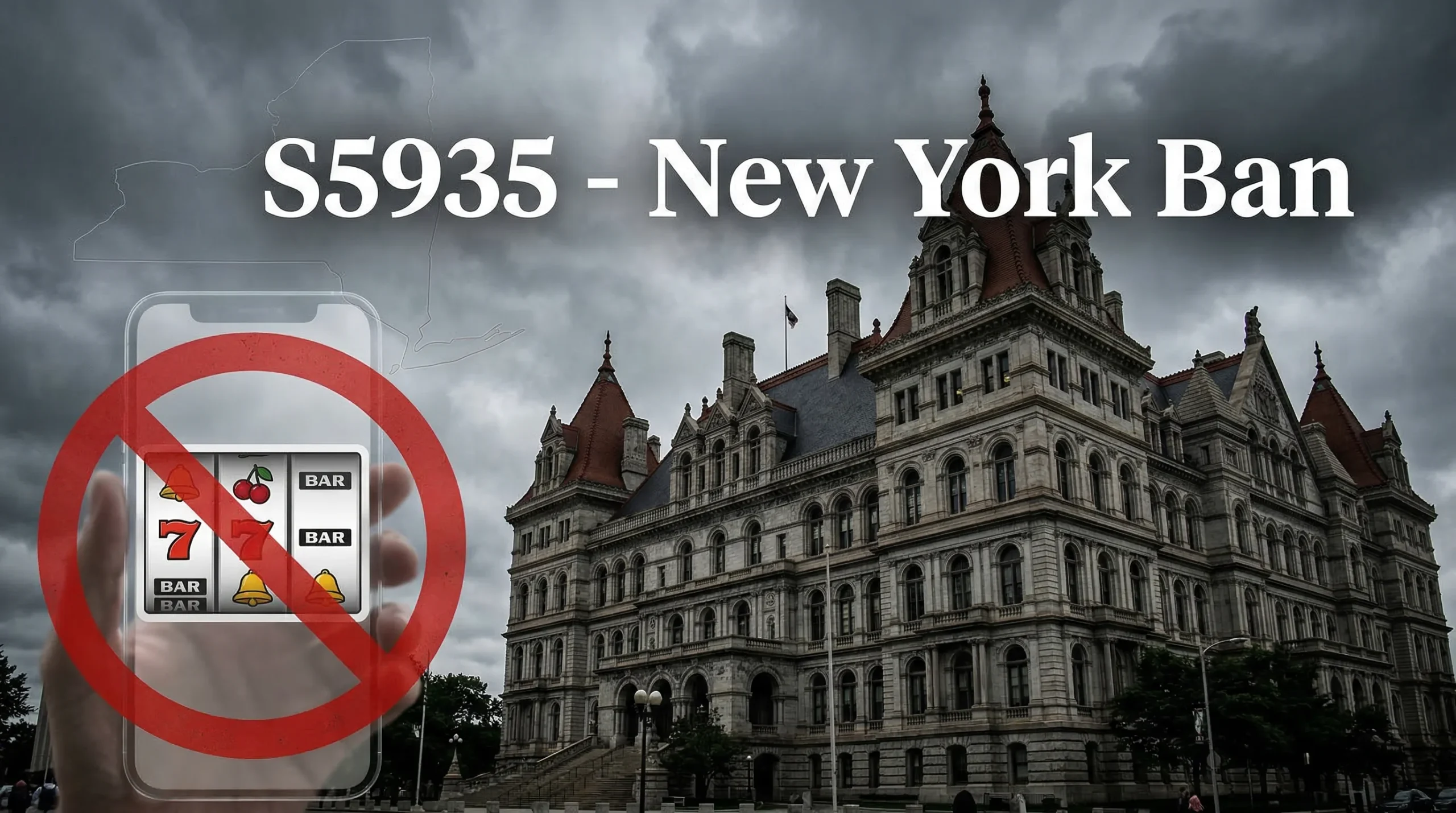
New York took decisive action against sweepstakes casinos in 2025, combining aggressive enforcement with new legislation that closed perceived loopholes. Governor Kathy Hochul signed Senate Bill S5935 on December 8, 2025, following months of Attorney General actions that had already forced most operators out of the state. The law codified what enforcement had initiated, leaving sweepstakes casinos with no path to legal operation in New York.
The regulatory assault reflected New York’s complicated gambling politics. The state operates a lottery, authorizes commercial casinos, and has been debating mobile sports betting expansion and iGaming legalization. Sweepstakes casinos represented competition that operated outside these carefully negotiated frameworks, threatening revenue that various stakeholders had claims to.
Understanding S5935 and the enforcement actions that preceded it reveals how states can effectively eliminate sweepstakes casinos when political will aligns across regulatory and legislative branches.
The Path to S5935
New York’s Attorney General Letitia James initiated enforcement actions against sweepstakes casinos months before S5935 reached the governor’s desk. Her office sent cease-and-desist letters to 26 sweepstakes operators, demanding they stop accepting purchases from New York residents. According to the NY Attorney General’s office, all 26 operators complied, ceasing sweepstakes coin sales to New York users.
The AG’s legal theory classified sweepstakes casinos as illegal gambling under existing New York law. Rather than wait for new legislation, James argued that current statutes already prohibited what these platforms offered. The cease-and-desist approach tested this theory without requiring court adjudication, as operators chose compliance over litigation.
Senator Joseph Addabbo Jr., Chair of the Racing, Gaming and Wagering Committee, championed S5935 to remove any ambiguity the AG’s enforcement might leave. Addabbo framed sweepstakes casinos in unequivocal terms: “If a game on your phone or computer looks like a casino game, acts like a casino game, and pays out real money winnings like a casino game, then it is a casino gambling game, thus currently illegal and should not operate in New York without proper regulation.”
The legislative process moved quickly once the AG’s actions demonstrated political support for eliminating sweepstakes casinos. S5935 passed both chambers with minimal opposition, reflecting bipartisan consensus that sweepstakes casinos had no place in New York’s gambling landscape.
What the Law Covers
S5935 explicitly prohibits sweepstakes casinos operating on a dual-currency model. The language targets games that provide virtual currency through purchases and allow conversion of secondary currency to real value. This precise targeting captures the standard sweepstakes casino model while leaving other promotional activities unaffected.
The law establishes civil penalties ranging from $10,000 to $100,000 per violation. Given that each player transaction could constitute a separate violation, exposure for non-compliant operators becomes substantial quickly. A platform serving thousands of New York customers daily would face potential penalties in the millions.
New York estimated its sweepstakes casino market at $762 million in 2024 sales, making it a significant state-level market. Operators weighing compliance costs against this revenue found the math favoring withdrawal, particularly with criminal exposure possible under existing gambling statutes that S5935 complemented rather than replaced.
The law grants enforcement authority to the Attorney General, district attorneys, and the state gaming commission. This multi-agency approach means operators cannot assume a single enforcement bottleneck will limit their exposure. Different authorities may pursue different theories and remedies simultaneously.
Platform operators, payment processors, and advertisers all face potential liability under the law’s broad language. This ecosystem targeting mirrors California’s AB831 approach and reflects legislative learning about how to effectively eliminate rather than merely inconvenience sweepstakes operations.
AG Enforcement Actions
Attorney General James’s enforcement campaign preceded S5935 and established facts on the ground that the legislation ratified. Her office argued sweepstakes casinos violated existing penal law provisions against gambling, making new legislation helpful but not strictly necessary.
The 26 cease-and-desist recipients included major platforms and smaller operators alike. The uniform compliance demonstrated that operators preferred voluntary withdrawal to testing the AG’s legal theories in court. Even operators who believed they could prevail legally calculated that litigation costs and uncertainty outweighed New York market value.
Enforcement focused on preventing new player acquisition and coin sales rather than immediately shutting down existing accounts. Players with balances received time to complete redemptions before full access termination. This phased approach reduced player harm complaints while still achieving the AG’s objective of ending sweepstakes operations.
The AG framed enforcement as consumer protection rather than industry regulation. Press releases emphasized player losses and problematic gambling concerns over technical legal violations. This framing built public support for actions that industry representatives characterized as overreach.
Ongoing monitoring ensures operators do not resume New York services after initial withdrawal. The AG’s office has indicated willingness to pursue penalties against any platform that attempts to re-enter the market, whether through direct operations or technical workarounds like VPN-accessible sites.
Impact and Future iGaming
The sweepstakes casino ban connects to New York’s broader gambling policy debates. The state has contemplated iGaming legalization that would authorize online casinos through regulated channels. Eliminating sweepstakes competition clears the field for whatever licensed system eventually emerges.
Existing gambling interests supported the ban for competitive reasons. Commercial casinos, tribal operations, and lottery officials all viewed sweepstakes casinos as revenue diversion. Their unified opposition to sweepstakes reflected aligned economic interests that transcended other disagreements about gambling policy.
Players lost access to platforms they had used without legal concern. The sudden shift from tacit acceptance to active prohibition surprised many users who did not follow legislative developments. Redemption deadlines created urgency that some players found stressful, particularly those with substantial balances accumulated over years of play.
The transition period required players to make quick decisions about their accounts. Some rushed to complete playthrough requirements on bonuses before access ended. Others prioritized immediate redemption of available balances over potentially higher returns from continued play. The compressed timeline forced choices that leisurely consideration might have resolved differently.
The New York model demonstrates that determined state action can effectively eliminate sweepstakes casinos. Other states observing New York’s success may adopt similar approaches, combining aggressive AG enforcement with confirmatory legislation. The sweepstakes industry’s hope that fragmented state-by-state regulation would prevent effective prohibition looks increasingly unrealistic.
Future iGaming legalization in New York would provide regulated alternatives to the sweepstakes casinos that were banned. Whether such legislation passes and when remains uncertain, leaving former sweepstakes players without comparable online options. The gap between eliminating unregulated gambling and authorizing regulated alternatives may persist for years, serving no one except in-person casino operators who face reduced competition.
For players who valued the convenience of sweepstakes casinos, New York’s options have narrowed substantially. Physical casinos require travel and operate on their schedules rather than yours. The lottery offers different game types without the slot and table game simulations that sweepstakes platforms provided. Daily fantasy sports remain legal but serve different entertainment preferences than casino-style games.
The regulatory precedent New York established will influence how other states approach sweepstakes casinos. Attorney General enforcement followed by legislative confirmation creates a template that requires neither years of litigation nor novel legal theories. States that want to eliminate sweepstakes casinos now have a proven method for doing so efficiently.
Enforcement Meets Legislation
New York’s S5935 and the AG enforcement campaign that preceded it demonstrate comprehensive state action against sweepstakes casinos. The combined approach of immediate enforcement and confirmatory legislation left operators no path to legal operation in the state.
The $762 million New York market represented significant revenue for sweepstakes operators, and its loss compounds the California and Montana exits that occurred the same year. The cumulative effect of state-by-state bans is reshaping an industry that grew accustomed to operating across nearly the entire country without meaningful regulatory interference.
For New York players, the transition is complete. Sweepstakes casinos that once accepted their play no longer do. The alternatives are in-person gambling, waiting for potential iGaming legalization, or accepting that this form of entertainment is no longer available. None of these options replicate what sweepstakes casinos provided, leaving a gap that regulatory frameworks have not yet filled.