
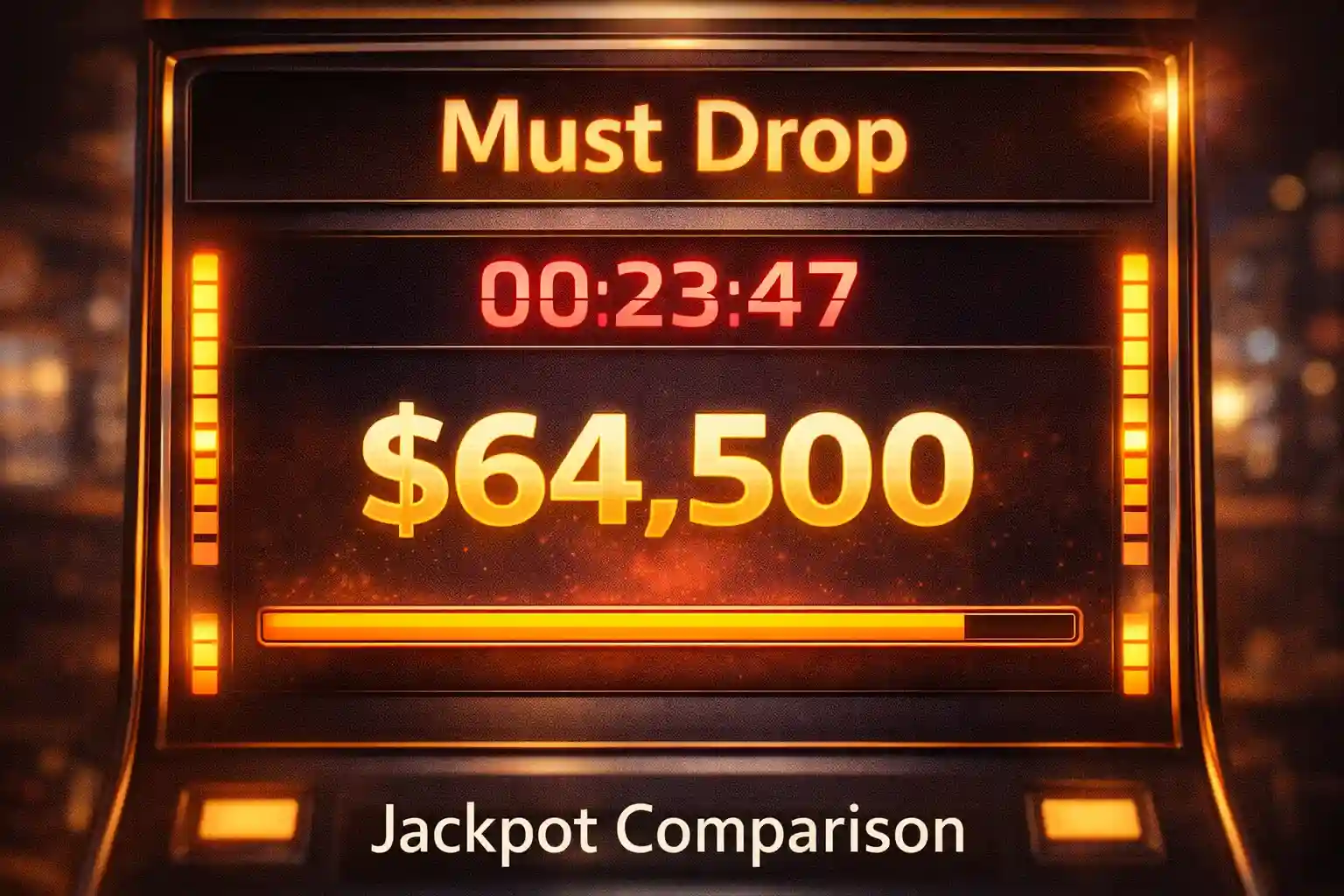
Introduction: Jackpots That Must Drop
Standard progressive jackpots grow indefinitely until someone wins. Must-drop jackpots invert this by guaranteeing payouts before specified thresholds. When the timer runs out or the value ceiling approaches, someone wins. The uncertainty shifts from whether the jackpot will pay to when and to whom.
The sweepstakes casino market generated $10 billion in sales during 2024, according to Eilers & Krejcik Gaming research. Must-drop jackpots represent one feature that smaller platforms use to differentiate from VGW’s dominant offerings. The guaranteed resolution appeals to players who find indefinite progressive timelines frustrating.
Understanding must-drop mechanics helps evaluate whether these features genuinely improve your jackpot opportunities or simply repackage standard progressive dynamics with marketing polish.
Must-Drop Jackpots at Sweepstakes Casinos — More on this topic at progressive sweep slots.
How Must-Drop Mechanics Work
Must-drop jackpots operate on predetermined trigger conditions rather than pure randomness alone. The primary structures are time-based drops that guarantee payouts within specified windows and value-based drops that guarantee payouts before jackpots reach ceiling amounts.
Time-based must-drops set deadlines for jackpot resolution. An hourly jackpot must trigger within 60 minutes. A daily jackpot must hit before midnight. The random number generator still determines which specific spin wins, but the system ensures someone wins before time expires. If organic triggers have not occurred by the deadline, the system forces a trigger on final eligible spins.
Value-based must-drops set ceiling amounts for jackpot resolution. A jackpot programmed to drop at $1,000 will trigger at or before reaching that value. As the jackpot approaches its ceiling, trigger probability typically increases. The system prevents indefinite accumulation by guaranteeing resolution within defined parameters.
Hybrid systems combine time and value constraints. A jackpot might be required to drop before midnight or upon reaching $500, whichever comes first. These dual constraints create multiple tension points within single jackpot cycles and ensure relatively frequent payouts regardless of player activity levels.
Contribution mechanics work similarly to standard progressives. Each eligible wager feeds the jackpot pool at specified rates, typically 1-5% of the bet amount. The difference lies in guaranteed resolution rather than the contribution structure itself.
Transparency varies between implementations. Some must-drops display countdown timers prominently. Others show only jackpot values without indicating proximity to trigger thresholds. The information asymmetry affects player decisions since those who know deadlines can time activity accordingly.
Hourly vs Daily vs Weekly Drops
Hourly must-drops create the most frequent guaranteed payouts. Within any given hour, someone will win. The compressed timeframe means smaller prize accumulation since less time exists for contributions to build the pool. Hourly jackpots typically range from tens to hundreds of Sweep Coins rather than thousands.
The appeal of hourly drops lies in achievable timelines. You can sit down, play for an hour, and know a jackpot will hit during your session. Whether you win depends on competition and luck, but the jackpot will not carry over indefinitely while you wait for eventual resolution.
Daily must-drops balance frequency against prize size. Twenty-four hours allows more substantial accumulation than hourly windows while still guaranteeing daily resolution. Daily jackpots often reach the low thousands in SC value, making them more meaningful prizes than hourly equivalents.
Strategic implications differ for daily drops. Playing late in the day means the jackpot must trigger soon, but more competitors also play during these windows. The concentration of activity near deadlines may not improve individual odds despite guaranteeing imminent resolution.
Weekly must-drops offer the largest guaranteed prizes at the cost of lower frequency. A week of contributions can build substantial jackpots that justify dedicated pursuit. However, the longer window means less predictable timing for any given session, reducing the deadline urgency that characterizes hourly and daily variants.
VGW, whose platforms generated A$6.1 billion in revenue during fiscal year 2024-25, has incorporated various must-drop mechanics across its portfolio. The feature appears on both VGW platforms and competitor sites, representing an industry-wide response to player preferences for predictable jackpot resolution.
Finding Must-Drop Games
Must-drop availability varies across sweepstakes casinos, with implementation depending on game providers and platform priorities. Not every platform emphasizes these features equally, making research necessary before assuming must-drops will be available on your preferred site.
Game providers rather than platforms often determine must-drop availability. Software companies that specialize in jackpot features build must-drop mechanics into their games. These games then appear on whichever platforms license them. Following game providers helps identify must-drop opportunities across multiple sweepstakes casinos.
Platform catalogs change regularly as licensing agreements evolve. A title available today might disappear tomorrow, while new must-drop games launch frequently. Checking current game libraries rather than relying on outdated information ensures you know what is actually available when you want to play.
Both hourly and daily variants exist across the sweepstakes market. Some platforms emphasize rapid-trigger hourly drops while others focus on larger daily accumulations. Your preference between frequent smaller prizes and less frequent larger ones should guide platform selection.
Larger platforms with bigger player bases see jackpots accumulate and trigger more frequently regardless of must-drop mechanics. The volume of play on established platforms means progressive pools grow faster and hit more often than on smaller competitors. This activity advantage compounds must-drop benefits when both features exist on the same game.
Strategic Considerations
The guaranteed trigger creates apparent strategic opportunities that pure random jackpots lack. If an hourly must-drop has not hit by minute 50, logic suggests it will trigger soon. Acting on this logic drives player concentration toward deadline windows. Whether this improves individual odds depends on how concentration affects competition.
More players targeting the same deadline means more competition for the same prize. If an hourly jackpot typically sees 5,000 spins throughout the hour but 2,000 occur in the final 10 minutes, playing during that window may not improve your percentage odds. The compressed timeframe guarantees resolution but not favorable odds.
Counter-timing strategies play during low-activity periods on the theory that fewer competitors improve individual chances. Morning hours might see less traffic than evening peaks. This approach trades deadline certainty for potentially better odds within longer timeframes.
Bankroll management matters more than timing optimization for most players. Must-drop games share the reduced base RTP that characterizes all progressives. Extended play chasing timing advantages can exhaust bankrolls before favorable windows arrive. Sustainable play across multiple cycles may outperform concentrated deadline sprints.
Information limitations prevent confident strategic conclusions. Without knowing competitor activity levels, trigger probability distributions, and other operational details, timing strategies become educated guesses rather than calculated advantages. The platforms hold information that would enable optimization but do not share it.
Playing the Clock
Must-drop jackpots offer guaranteed resolution that standard progressives lack. The time pressure creates engagement that some players prefer over indefinite accumulation. Whether the guaranteed trigger actually improves individual win probability depends on competition dynamics that remain largely opaque.
The feature serves as effective marketing regardless of mathematical implications. Players who understand that someone will win find must-drops more appealing than progressives that might not hit for months. The psychological benefit of compressed timelines has value even when it does not translate to better odds.
Players interested in must-drop jackpots should verify availability before selecting platforms. The feature appears inconsistently across sweepstakes casinos and specific games. Researching current offerings ensures you can access the jackpot types you prefer rather than discovering limitations after committing to a platform.
See also Sweepstakes Casino Payouts.