Introduction: California’s Historic Ban
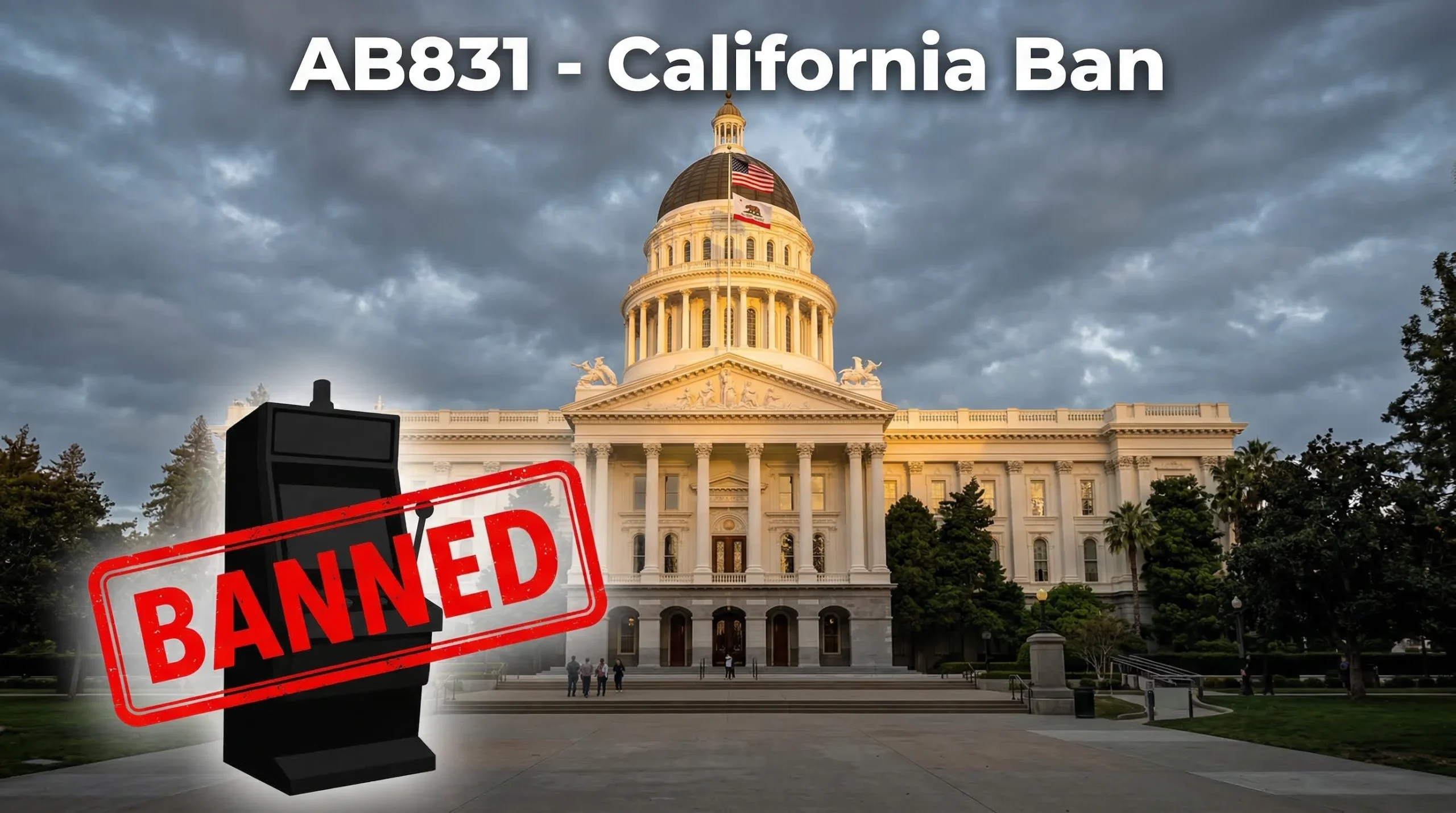
California became one of the most significant states to ban sweepstakes casinos when Governor Gavin Newsom signed Assembly Bill 831 on October 11, 2025. The law took effect January 1, 2026, immediately prohibiting sweepstakes casino operations throughout the state. Given California’s population and market significance, the ban reshapes the national sweepstakes landscape.
The stakes were substantial. California represented the largest single market for sweepstakes casinos, with Eilers & Krejcik Gaming estimating the state generated $2.42 billion in sweepstakes activity during 2025, accounting for 17.3% of the entire US market. Losing California forced operators to recalculate their business models and triggered exits that affected millions of players.
Understanding AB831’s provisions, timeline, and enforcement mechanisms helps California residents navigate the new legal reality and helps players elsewhere anticipate what similar legislation might mean if their states follow California’s lead.
What AB831 Prohibits
AB831 targets the dual-currency model that distinguishes sweepstakes casinos from traditional gambling. The law prohibits operating, offering, or promoting any game that uses simulated gambling through a secondary currency redeemable for real value. This language captures the Gold Coin plus Sweep Coin structure that major sweepstakes platforms employed.
The prohibition extends beyond direct operators to vendors and service providers. Payment processors, game developers, and marketing affiliates all face potential liability under the law’s broad language. According to ZwillGen’s legal analysis, this vendor liability provision distinguishes AB831 from narrower bans that focus only on the platforms themselves.
Advertising sweepstakes casinos to California residents violates AB831 regardless of where the operator is located. A platform based in Malta or Australia that accepts California players and markets to them falls within the law’s reach. The extraterritorial application complicates compliance for international operators who previously treated California as accessible.
The dual-currency focus means traditional social casinos that offer only play-money gaming remain unaffected. If Gold Coins have no redemption pathway and Sweep Coins do not exist, the game falls outside AB831’s scope. The distinction turns on whether real monetary value can be extracted from the system, not on whether the games resemble gambling.
Promotional sweepstakes that do not involve gambling mechanics also escape the ban. A retailer offering entries to win prizes through purchases operates under different legal frameworks than a simulated casino offering redeemable currency. AB831 specifically addresses the gambling-simulation model rather than all promotional activities.
Timeline and Effective Date
The legislative journey to AB831 began with tribal gaming interests who viewed sweepstakes casinos as competition undermining their state-granted exclusivity. California tribes hold extensive gaming compacts that were negotiated based on assumptions about what competition they would face. Sweepstakes casinos, unmentioned in those compacts, represented unanticipated rivalry.
Assembly Member Akilah Weber introduced AB831 in February 2025. The bill moved through committee with bipartisan support, reflecting unusual agreement that sweepstakes casinos occupied problematic legal territory. Traditional gambling interests, tribal gaming advocates, and consumer protection groups all supported the measure for different reasons.
Governor Newsom signed AB831 on October 11, 2025, with an effective date of January 1, 2026. The roughly 80-day window between signature and implementation gave operators time to exit California markets and gave players time to redeem existing balances before access terminated.
Most major sweepstakes platforms announced California withdrawals within days of the signing. Players received notifications about pending account restrictions and deadlines for completing redemptions. The compressed timeline created urgency that some players found stressful, particularly those with substantial unredeemed Sweep Coin balances.
Penalties for Operators
AB831 classifies operating a prohibited sweepstakes casino as a misdemeanor. Penalties include fines ranging from $1,000 to $25,000 per violation and potential imprisonment up to one year. Each day of operation and each transaction could constitute separate violations, creating exposure that accumulates rapidly for non-compliant operators.
Civil enforcement provides additional mechanisms beyond criminal prosecution. The California Attorney General, district attorneys, and city attorneys can seek injunctions, disgorgement of profits, and civil penalties. This multi-pronged enforcement structure means operators face threats from multiple authorities simultaneously.
The vendor liability provisions create uncertainty for companies adjacent to sweepstakes operations. A payment processor handling California transactions for a banned platform could face its own penalties. This downstream liability encourages the broader ecosystem to refuse California-related business regardless of direct involvement in operating games.
Enforcement priorities will determine how aggressively California pursues violations. Initial focus likely targets operators who defiantly continue serving California residents despite the ban. Subsequent enforcement might expand to affiliate marketers, payment services, and others who facilitate continued access.
Impact on California Players
California residents lost access to sweepstakes casinos they had used legally for years. The transition required redeeming accumulated Sweep Coins before platform access terminated, updating expectations about available entertainment options, and in some cases accepting losses on balances that could not be fully redeemed before deadlines.
Alternative gambling options in California remain limited. The state has no legal online casinos or sports betting. Tribal casinos offer in-person gambling but nothing remotely resembling the convenience of sweepstakes platforms. For players who valued always-available access from home, no legal substitute exists.
Some players relocated activity to states without bans, using VPNs or alternative addresses. This approach carries legal risk since providing false location information to access prohibited services could constitute fraud. Platforms that detect location misrepresentation typically forfeit accounts, meaning the attempted workaround could result in total balance loss.
The social communities built around sweepstakes platforms fragmented as California members departed. Discord servers, Facebook groups, and other gathering places for platform enthusiasts lost substantial membership. For players who valued community as much as games, this social loss compounded the access loss.
Consumer protection perspectives might view the ban positively. Players who developed problematic relationships with sweepstakes casinos now face forced cessation. Those who lost money they could not afford or exhibited addictive patterns receive involuntary intervention. Whether this paternalistic outcome is beneficial depends on individual circumstances and values.
The Largest State Falls
California’s AB831 represents the most economically significant sweepstakes casino ban enacted to date. The state’s $2.42 billion market share meant the law’s impact extended far beyond California residents to affect operator revenues, industry projections, and regulatory momentum nationwide.
The law’s structure, particularly its vendor liability provisions and broad definitions, may serve as a template for other states considering similar action. What California does often influences national trends, and AB831’s passage encouraged legislators elsewhere to pursue comparable measures.
For California players, the ban is simply reality to navigate. Legal access to sweepstakes casinos ended January 1, 2026. The options now are accepting that loss, pursuing legal alternatives like in-person tribal casinos, or waiting to see whether future legislative changes might restore access. The latter seems unlikely given the political coalition that supported AB831, but regulatory environments can shift unpredictably.
The sweepstakes industry faces an increasingly hostile landscape following California’s action. Other large-population states may follow the template AB831 established, further shrinking the accessible market. Operators must now calculate whether remaining states provide sufficient revenue to sustain operations that have lost their largest single market.
Players in states without bans should observe California’s experience as a preview of what their own futures might hold. The regulatory momentum against sweepstakes casinos continues building, and the jurisdictions still permitting access may not do so indefinitely. Enjoying current access while maintaining awareness of how quickly circumstances can change represents prudent engagement with an industry in regulatory flux.