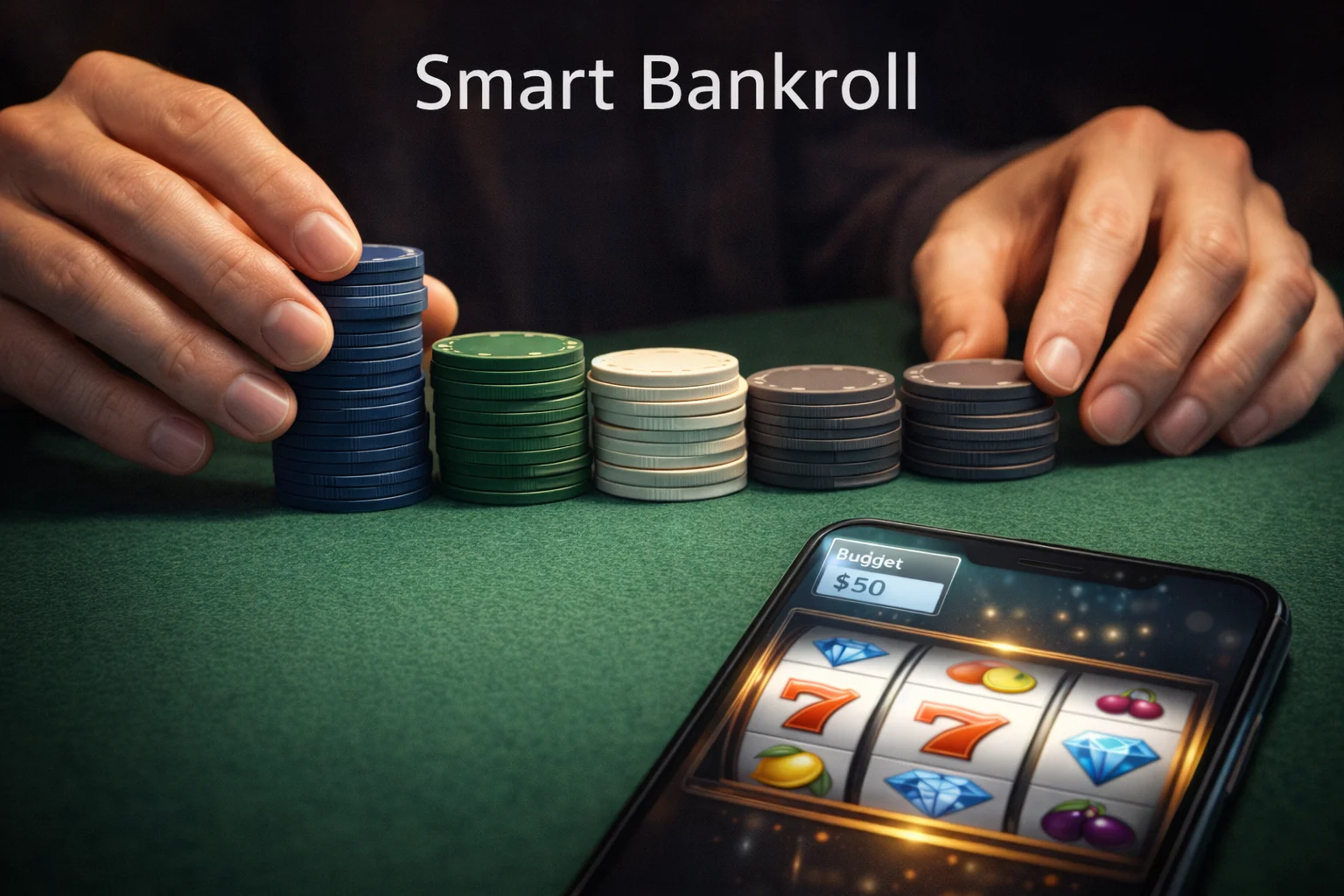
Introduction: Why Bankroll Management Matters
Sweepstakes casinos operate on a dual-currency model that can obscure how much you actually spend. Gold Coins arrive through purchases that feel like buying entertainment credits rather than gambling stakes. Sweep Coins accumulate as bonuses, creating the illusion of free play. Without deliberate bankroll management, these mechanics encourage spending patterns that would alarm anyone tracking their money directly.
The stakes extend beyond financial loss. Research from the National Council on Problem Gambling found that 15% of adults aged 18-34 reported problematic gambling behavior, compared to just 2% of those 55 and older. Online gambling participation has risen to 22% of adults in 2024, up from 15% in 2018. The accessibility of sweepstakes casinos contributes to these trends, making personal limits more important than relying on external controls.
Effective bankroll management transforms sweepstakes play from reactive spending into deliberate entertainment budgeting. The goal is not to win more but to lose less than you can afford while maintaining the enjoyment that drew you to these platforms.
Setting GC Purchase Limits
Gold Coin purchases represent your actual financial exposure to sweepstakes casinos. Whatever amount you spend on GC packages is money leaving your bank account regardless of what happens afterward. Setting purchase limits before you start playing prevents in-session decisions from overriding your budget.
Monthly limits work better than session limits for most players. A $100 monthly budget provides clear guardrails regardless of how many sessions you play or how those sessions unfold. Some players prefer weekly limits for tighter control, particularly when starting out. The specific amount matters less than choosing a number you can genuinely afford to lose entirely.
Calculate your limit from discretionary income, not total income. After rent, utilities, food, transportation, savings, and other obligations, what remains for entertainment? Sweepstakes spending should compete with movies, dining out, and hobbies rather than necessities. If allocating $50 to sweepstakes means skipping meals or missing bills, the limit is too high.
Platform tools can enforce limits you set. Many sweepstakes casinos offer deposit limits, cooling-off periods, and self-exclusion options. Using these features removes willpower from the equation. A limit enforced by software does not negotiate with you at 2 AM when the jackpot meter looks especially tempting.
Track purchases outside the platform as well. Bank statements and credit card records provide objective history that platform dashboards might present more favorably. Reviewing actual spending monthly reveals patterns that in-app tracking can obscure. Some players find that writing down each purchase manually increases awareness more than any automated tool.
Separate payment methods help isolate sweepstakes spending. A prepaid card loaded with your monthly budget creates a hard stop when funds run out. Linking sweepstakes accounts to primary bank accounts or credit cards with high limits removes friction that might otherwise prompt reconsideration before purchases.
Managing SC Play Sessions
Sweep Coins feel free because they arrive as bonuses alongside Gold Coin purchases. This psychological framing encourages careless play since you are not betting “real money.” But SC wins convert to actual cash. The redemption pathway makes SC play genuine gambling even when the initial coins cost nothing directly.
Session time limits prevent the extended play that leads to poor decisions. Fatigue, frustration, and the sunk cost fallacy all intensify over long sessions. A two-hour maximum keeps you playing while judgment remains intact. Some players set timers; others plan sessions around external commitments that force natural stopping points.
Win goals and loss limits provide exit triggers based on outcomes rather than time. A loss limit might be 50% of your starting SC balance. A win goal might be doubling your balance or hitting a specific target. When either trigger hits, you stop. No exceptions, no extending limits mid-session.
The discipline to stop while winning proves harder than stopping after losses for many players. Winning sessions feel like opportunities to win more. But variance works both directions. The hot streak that doubled your balance can reverse just as quickly. Taking profits protects gains that extended play would likely surrender.
Session breaks disrupt the trance-like state that extended slot play can induce. Every hour, step away for at least ten minutes. Check the time, check your balance, check your emotional state. If you are playing to chase losses or escape problems, the break provides space to recognize those patterns before they cause more damage.
Separate sessions for SC redemption play and GC entertainment play help maintain clarity about what you are doing. When playing SC for potential cash redemption, apply tighter bankroll discipline. When playing GC purely for entertainment, different standards might apply since no real money outcome is possible. Mixing modes blurs the lines that effective management requires.
Avoiding Common Mistakes
Chasing losses represents the most destructive pattern in any gambling context. A losing session creates the urge to continue playing until losses reverse. This rarely works. The games have not changed; your emotional state has deteriorated. Chasing converts manageable losses into devastating ones. When you hit your loss limit, stop. The money is gone. Additional play makes it worse.
Bonus hunting without understanding terms creates false expectations. Welcome bonuses and promotions offer apparent value that playthrough requirements often negate. A 100% deposit match sounds generous until you realize the 35x playthrough requirement means wagering $3,500 before withdrawal on a $100 bonus. Calculate actual expected value before letting bonuses influence purchase decisions.
Treating sweepstakes casinos as income sources rather than entertainment expenses inverts the proper relationship. Some players win. Most lose. The mathematics guarantee aggregate player losses or platforms could not operate. Approaching sweepstakes play expecting to profit sets you up for disappointment and poor decisions when losses accumulate.
Ignoring the dual-currency psychology lets platform design manipulate your behavior. Gold Coins exist partly to distance spending from money. Bonus Sweep Coins exist partly to encourage more play. Understanding these mechanics does not require cynicism about the platforms but does require awareness that their interests and yours are not identical.
Playing during emotional distress uses gambling as coping rather than entertainment. Stress, boredom, loneliness, and anxiety all drive problematic play patterns. If you notice yourself reaching for sweepstakes apps when upset, the activity has shifted from recreation to self-medication. That transition precedes most serious gambling problems.
Borrowing money to fund sweepstakes play crosses a line that separates entertainment spending from problem gambling. No entertainment is worth debt. If you have exhausted your budget and consider borrowing, the appropriate response is stopping entirely, not finding new funding sources.
A Final Word
Bankroll management for sweepstakes slots requires confronting the ways these platforms obscure spending and encourage excess. The dual-currency model, bonus structures, and always-available access all work against natural restraint. Deliberate systems and firm limits counteract design features that would otherwise drive behavior.
The goal is sustainable play that fits within your broader financial life. Entertainment spending should enhance wellbeing, not threaten it. Sweepstakes casinos can provide genuine enjoyment when approached with appropriate boundaries. Without those boundaries, the same platforms can cause significant harm.
Start with limits you are confident you can maintain rather than amounts you hope to keep. Build discipline before building budgets. If you find yourself repeatedly violating your own rules, the issue may extend beyond bankroll management into territory where professional support becomes appropriate. The National Council on Problem Gambling helpline at 1-800-522-4700 provides free, confidential assistance.